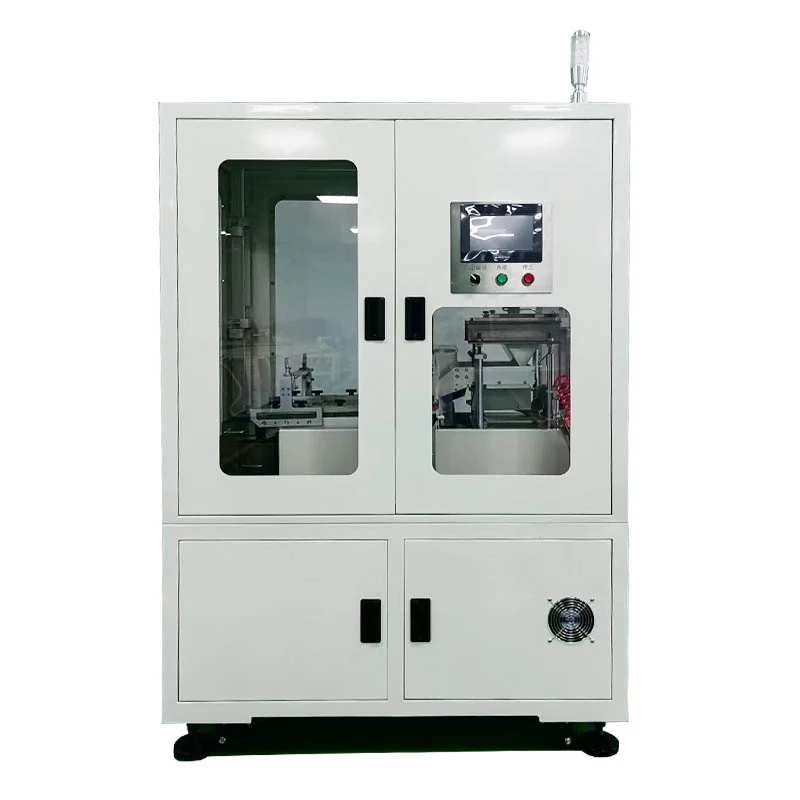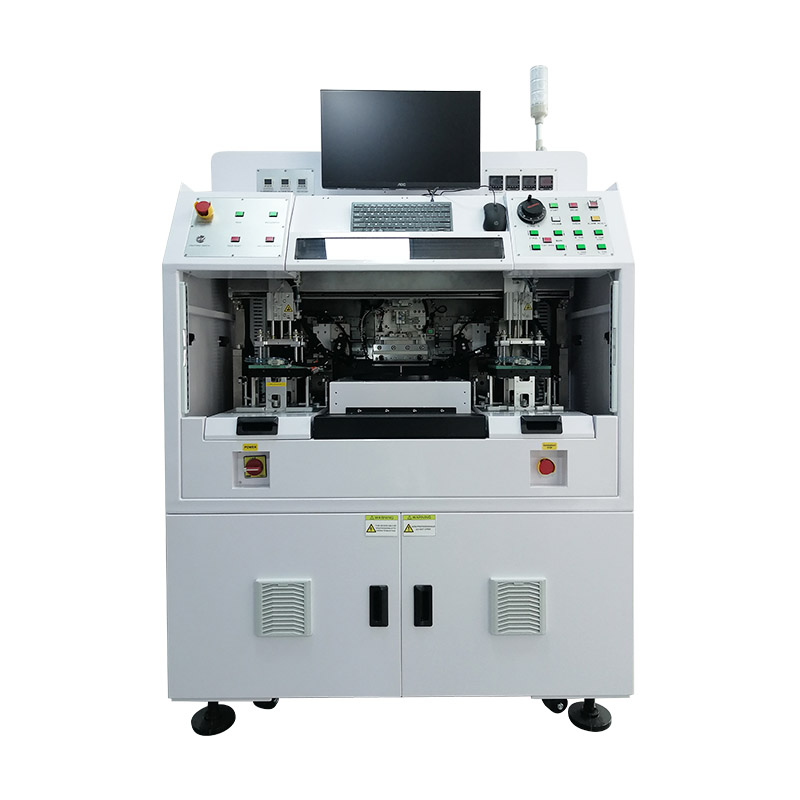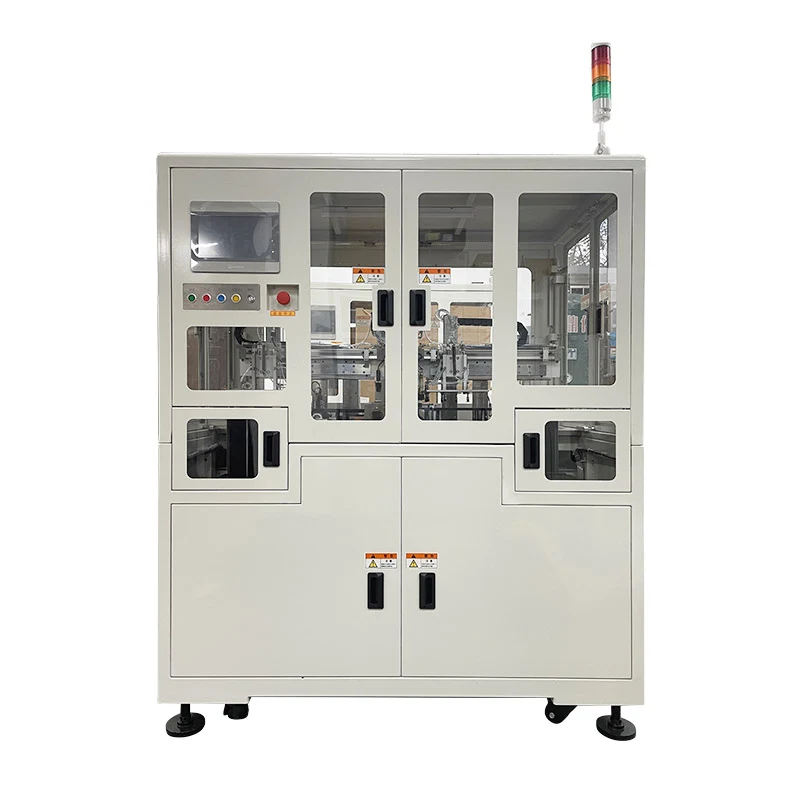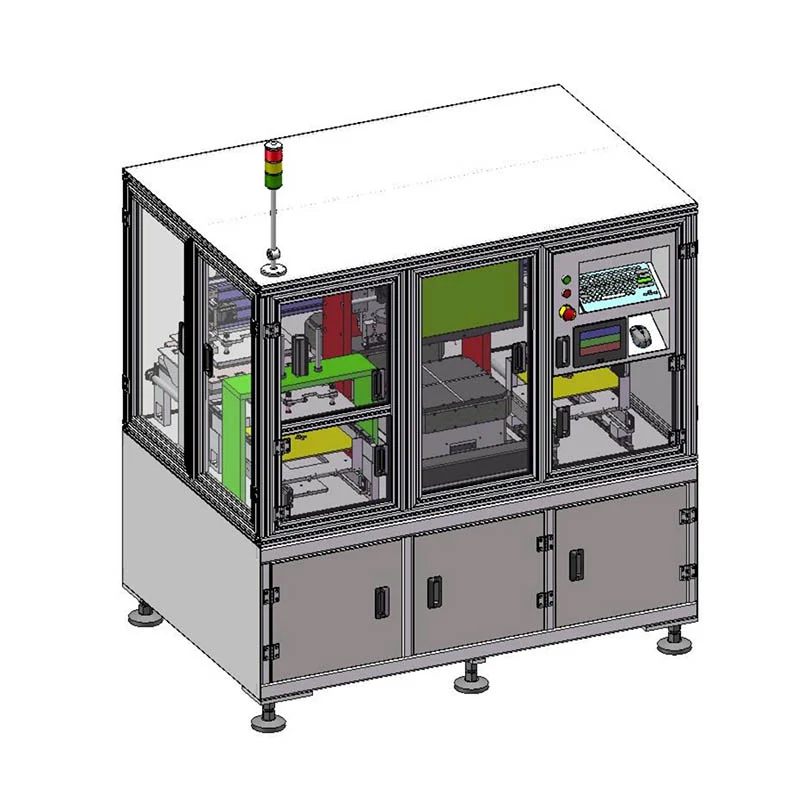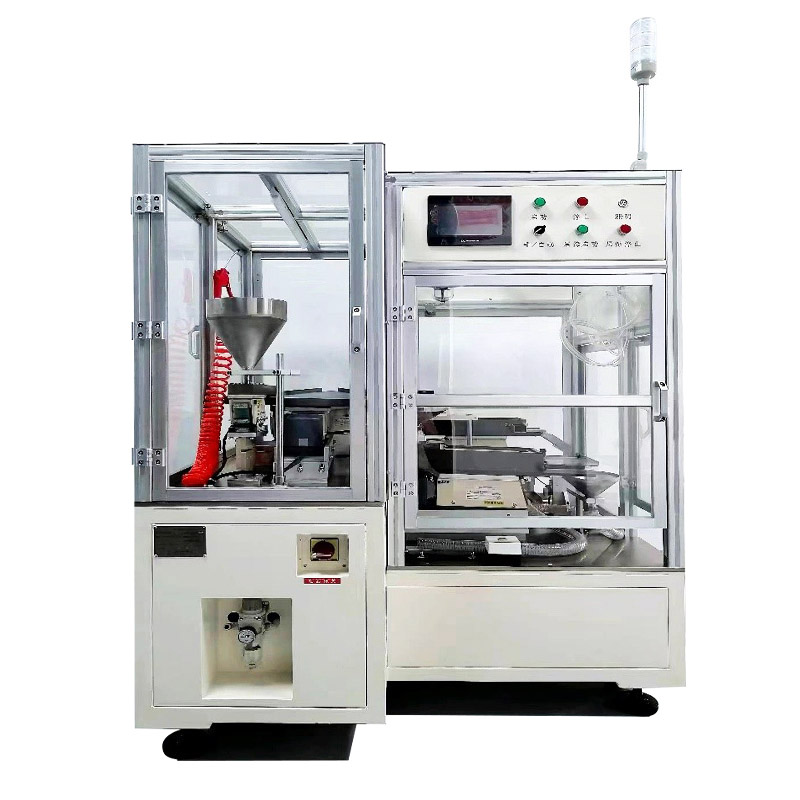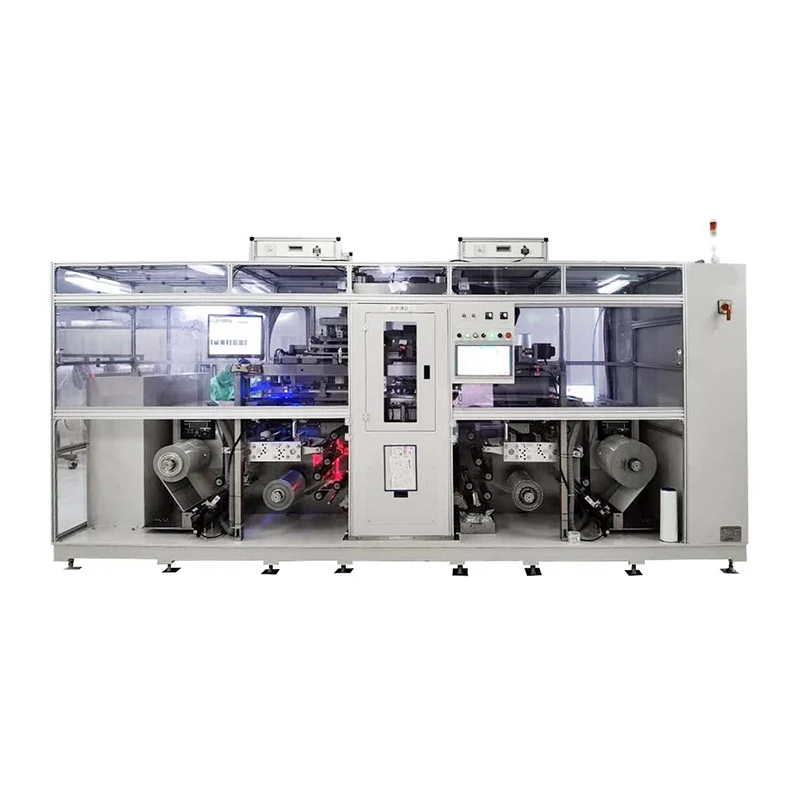


Automatic Locking: After the materials enter the high - pressure chamber, the high - pressure chamber is automatically locked.
Automatic Heating: After starting work, heating starts automatically according to the set temperature.
Automatic Pressurizing: When the set conditions are met, pressurizing starts automatically.
Over - pressure Protection: Multiple protection measures are adopted to prevent over - pressure, and a safety valve is installed.
Touch - screen Operation Function: It is fully operated by a touch - screen. All parameters are set on the touch - screen. The operation is simple and convenient, and the human - machine interface is friendly.
Safety Function: The hardware is equipped with an emergency stop switch, and the software is equipped with an interlock function. In case of an emergency, the emergency stop switch can be pressed to stop the operation of the equipment. The interlock function realizes the interlock of mutually interfering moving mechanisms in the software, maximizing the safe operation of the equipment.
The equipment has alarm and fault prompt functions.
Adjustable Heating and Pressurizing Time: The starting time of equipment pre - heating, the pre - heating time of products, and the lamination time of products can be set. The PSI of the chamber pressure can be customized according to customers.
Equipment Dimensions: 1700×1150×2250 (mm)


A. Properly wear protective equipment.
B. Conduct equipment safety inspections.
C. Follow operating procedures and risk mitigation measures:
Do not touch moving parts (e.g., cutters, pulley wheels) with hands.
Do not adjust, measure, or clean debris by hand during operation.
For multi-person collaborative operations, clarify division of responsibilities to avoid accidental activation of control devices.
D. Equipment maintenance and emergency preparedness:
Perform regular maintenance and upkeep.
Clean equipment after use; inspect worn parts (e.g., cutters, bearings) and replace them promptly.
Regularly test safety devices (e.g., protective covers, emergency stop switches); unauthorized removal is prohibited.
E. Emergency response:
In case of sudden malfunction or accident, immediately cut off power and report the incident; do not attempt to repair equipment while it is running.
Delivery period: 90 days.
|
Characteristic Dimension |
Ordinary Single-Axis Press (Manual/Automatic, Cold/Hot Pressing) |
Fully Automatic Warm Isostatic Press (WIP) |
Core Advantages & Value of WIP |
|
Pressure Direction & Uniformity |
Unidirectional (top/bottom) pressure application, with pressure gradient |
Isotropic (360° uniform wrapping) pressure application, without directionality |
Elimination of lateral shear force, avoiding edge compression and “barrel-shaped” deformation; extremely uniform density, consistent sintering shrinkage |
|
Temperature Control |
Usually no heating, or only single-directional hot-plate conduction; uneven temperature |
Precise temperature control via liquid medium (commonly 50–100°C), uniform temperature field (e.g., ±1°C) |
Precise softening of binder to the high-elastic state, promoting molecular diffusion for “seamless fusion”; avoids local overheating or insufficient heating |
|
Interlayer Bonding Mechanism |
Relies on pressure to cause local flow of binder at the interface; mainly mechanical interlocking |
Temperature–pressure synergy drives overall molecular diffusion and entanglement of the binder, forming molecular-level fusion |
Complete elimination of interlayer micropores and delamination; high interface bonding strength, good hermeticity, high reliability |
|
Complex 3D Structures (Microchannels, Cavities) |
High risk: side walls subject to shear stress, prone to collapse and deformation |
Natural protection: uniform pressure supports complex structures, but requires precise pressure control |
Enables successful manufacturing of LTCC devices with open cavities, microchannels, etc. (requires combination with sacrificial support and other processes) |
|
Green Body Density & Quality |
Presence of density gradients; internal micropores may exist |
High and uniform green density, reducing internal defects |
Provides better shrinkage consistency for subsequent sintering, reducing risks of warping and cracking, improving final yield |
|
Process Controllability & Automation |
Pressure control only; low degree of programmability, relying on manual experience |
Precise multi-parameter programming: pressure, temperature, time, vacuum; fully automatic cycle |
Wide process window, extremely high repeatability; suitable for batch and high-demand production, reducing human error |
|
Equipment Complexity & Cost |
Simple structure, low cost |
Complex system (heating, sealing, pressure control systems); expensive equipment |
High investment, but anecessary investment for specific high-value-added, high-difficulty products (e.g., microfluidics, microwave devices) |
Address
Room 101, No.35-6, Xinjing Road, Haicang District, Xiamen City, Fujian Province, China
Tel